Recently, while playing through Valis: The Fantasm Soldier, I started thinking about earlier games that might have influenced it. It's just something I tend to do while playing through various games. As I mentioned in the review, it seemed to be trying to emulate Ninja Gaiden in some ways. After doing a bit of research, it looks like the original Valis actually came out first, so maybe the influence was the other way around? Either way, it brought back memories of the first Ninja Gaiden game. I remember reading the previews in Nintendo Power magazine about this crazy new ninja game that was supposed to feel like a movie. Sure, I already had Golgo13: Top Secret Episode which played like a movie, but this one promised something different.
Before getting into the review, I should clarify what "Ninja Gaiden" I'm talking about. The first Ninja Gaiden game was an arcade game in 1988. It was a big hit, so a port was released for the NES, because back in the late 80's, the NES pretty much was the game industry. Not uncommon for NES ports, this game was very different from the arcade version. In the early 90's, Sega got a piece of the pie and enjoyed releases for the Master System, Game Gear, and Genesis (or Mega Drive, depending on where you lived). Each of these games was simply called "Ninja Gaiden", and each one was completely different from any of the previous releases, and from each other. Over a decade later the series enjoyed a revival as an XBox game was released, again called "Ninja Gaiden". This doesn't even take into account all of the sequels spread across the various systems, but so far there have been at least six different games released titled just "Ninja Gaiden". In order to avoid any confusion, this review is about the NES release, and only that game.
So, what made Ninja Gaiden so special? Well, when I first popped the game in, I saw something I had never seen before in a game. I saw my first cinematic cutscene. Cutscenes are so common these days that we don't even think about them, unless we're complaining about them being too long, but back in the 80's it was revolutionary. Games like Golgo 13: Top Secret Episode had drawn out dialog scenes and animated story telling, and other games had the in game characters move and talk on their own. Even the infamous "The Princess is in another castle" could be considered a primitive cutscene of sorts, but Ninja Gaiden truly expanded on the concept. These cutscenes employed liberal use of cinematic techniques such as close ups, panning shots, dramatic camera angles, reaction shots, and slow motion action. Or, at least the best approximation of these techniques that 8-bit sprite animation would allow.
Adding to this was a soundtrack that pushed the 8-bit FM sound chip to its limits providing not only some of my favorite music on the NES (behind Blaster Master of course!), but some well timed sound effects that really added life to these silent movie style cutscenes. All of this would have fallen flat however if the graphics had been sub-par, but luckily they don't disappoint either. The in game graphics are like a mash-up of Castlevania and Double Dragon sprites with some random military guys thrown in for good measure, but they do the job well and fit the story. It's the cutscenes again where the graphics really wowed the world. How often do you get to see 8-bit plaid?
The game's story was also much more advanced than what gamers were used to at the time. Most game stories of the era consisted of an opening "There's a bad guy threatening the world, go stop him", and then you're on your way, with maybe a "How dare you try to stop me" at the end when you finally face the big bad guy. Ninja Gaiden took things differently. It was a tale of revenge and mystery full of plot twists, surprise betrayal, and characters you could actually get to know and care about. It followed a young man named Ryu as he attempts to avenge the unexplained killing of his father Ken. (No relation to Ken and Ryu from the Street Fighter series, at least as far as I know) It also features the first appearance (again, as far as I know) of one of the most iconic and influential lines of dialog in video games, a line of dialog that would go on to be reused in more games than even probably even existed at the time Ninja Gaiden was first created. Yes, to the best of my knowledge, Ninja Gaiden was the first game to use "..." as an entire line of dialog. Ok, after that build up, it's probably a let down. But I personally find it significant, and I still think of this game everytime I see it.
The game itself is a side scrolling action platformer that combines the fighting aspects of games such as Shinobi with the jumping around aspects of games such as Super Mario Bros. It wasn't the first game to make this combination, but it managed its own balance of the two that gave the Ninja Gaiden series a unique feel. The most noteworthy gameplay mechanic is the player's ability to stick to walls. This allows some interesting level design by having you jump back and forth between various vertical surfaces to reach areas that look unreachable. It's a small thing, but this really helps to give the game more of a ninja-style feel, at least when compared to other action platformers of the time.
The levels are linear, but in a winding fashion that lets it feel like you're exploring without ever letting you get lost. the occasional forks in design are short, and are generally to let you collect optional items or power ups. The levels are each spread across multiple environments, each with their own look.The locations are pretty varied but the cutscenes tie it all together with the story so it always makes sense why you'd be there. Each level culminates in a boss fight. These fights are a satisfying combination of clever strategy and simply hacking away. Sticking to the walls to evade attacks adds an extra level of thought to the battles.
Your main weapon is your sword. It's never replaced or upgraded, so it feels just as powerful on the first level as it does on the last. It's range is limited however, so to augment this you also have access to power ups. As in earlier games such as Castlevania, these power ups are held in floating objects, and are released by striking them. Many of them are secondary weapons such as throwing stars, boomerang stars, spin slash ability, or orbiting balls of fire. Other's offer ammo for these weapons, add extra time to the clock, or freeze all of the enemies for a short time, or of course add an extra life. Then there's the always disappointing extra points power up that adds to your high score, but doesn't actually help you get through the game.
That brings up one of my gripes with the game. Ninja Gaiden's arcade origins are ever present throughout the game. Mostly in the pacing and the non-stop action, but also in some of the more out of place feeling contrivances. Each level has a time limit, something the Super Mario Bros. series for example gave up on with their first home console exclusive release (the first SMB was actually an arcade port). I can understand that in an arcade you don't want one player clogging up the line by playing too slow, or at least you want to charge more quarters, but in a home console game presenting an adventure on such a grand scale, it feels cheap to have a clock in the corner that will kill you if you take just a bit too long. It discourages careful thoughtful play, and offers more frustration than challenge.
Ninja Gaiden was an incredibly innovative and influential release in the history of gaming. It was a game outgrowing its arcade past, while still growing into its console home, and defining what a console title could be at the same time. Playing through it now, it's far from a perfect experience. Like many classic games, it's much more difficult than many modern gamers care to put up with, and the gameplay does tend to get repetitive after a while. Yet, there's no denying that this is a true classic that helped to shape what games are today.
Monday, July 15, 2013
Monday, July 8, 2013
Evoland (Shiro Games, 2013)
Way back in 1978, when I was just a baby, a musician named Frank Zappa released a song called Joe's Garage as the opening track of a concept album of the same name. When I first listened to the song, I thought it was a good tune. It told a fun story, and I liked how it changed the arrangement around as it went.
Years later I was watching the History Channel (back when they actually had shows about history, I've ranted about this before) and they showed a program on the history of rock music. It started with folk, country, and blues roots, and traced it through Mowtown, Elvis, the Beatles, surf, punk, psychedelic, sort of the entire route of inspiration that rock music took over the decades.
Shortly after that, I listened to Joe's Garage again, and it hit me. This song was genius! This one song traced the entire history of rock music in order from the its roots up until the birth of heavy metal in the late 70s. Being too young to be familiar with the historic timeline, it went completely over my head when I first heard it, but it was all there.
But, music isn't the only form of media where this type of nostalgic journey can take place, as was proved by Shiro Games when they made Evoland.
Evoland is less subtle about its purpose than Joe's Garage was (wow, did I just call Frank Zappa subtle?), but it could be argued that video games are in general a less subtle form of media. Evoland attempts to trace the evolution of gaming. Or, more specifically, the evolution of adventure games. Well, kind of.
There's no reference to classic PC text adventures or graphic adventures, and if you have fond memories of Adventure on the Atari 2600, hold on to them because you won't find any reminders here. The evolution presented here starts with The Legend of Zelda, which admittedly is when adventure games went mainstream. It's also a bit out of order. The NES was released years before the Gameboy, but for the purposes of the game, starting in black and white just makes more sense.
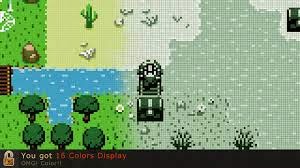
So, what exactly is Evoland? As I mentioned in my Wake review, retro themed games are a growing trend right now, but I've never seen one take things as far as Evoland. Rather than emulating the graphical style and game mechanics of one era and genre, Shiro Games has meticulously recreated almost a dozen different styles. Mostly, it emulates games from the Zelda and Final Fantasy series, both 2D and 3D incarnations of each, but there's a good chunk of Diablo thrown in later in the game too.
The game evolves through treasure chests. Each time you open a treasure chest, there's a chance of evolving the graphics, audio, or gameplay in some way. Sometimes chests are blocking your path to ensure that they are opened. On the graphics side, the game goes from black and white, to 8-bit NES style color, to 16-bit SNES style color. The game eventually transitions from 2D to 3D with Mode 7 effects, pre-rendered backgrounds, and full polygonal worlds with upgradable levels of texture detail. The gameplay starts as a 2D Zelda clone, but grows as it offers turn based battles, random encounters, hack n' slash loot dungeons, and even the obligatory fetch quest.
Actually, I've never seen a game combine real-time action adventure combat with authentic turn-based JRPG combat quite as smoothly as Evoland does. Some parts of the game have enemies crawling around that you have to attack with your sword (or bow and arrow, or bombs), and in other parts you battle your enemies by selecting for each member of your party to attack, or use items or magic from the menu. Even the inventory and pause menus change depending on what part of the game you are in. It is a little weird that the potions you buy during the RPG sections can't be used to refill your heart containers in the action adventure inspired sections, but this game tends to put gameplay before narrative, so it's probably more fun this way.
It is worth pointing out that none of the different mechanics presented are very deep, at least not compared to the games that they are based on. This can be seen as either a positive or negative aspect depending on how you look at it. I generally saw it as a plus because as the game isn't terribly long, expecting the player to master as deep of an upgrading and leveling mechanic as might be found in a much longer game, and then do it again several more times would be unreasonable. What you essentially get is a light version of each style. Bombs and arrows are unlimited, as is your magic in the turn based fights (go ahead and heal every other turn!). Leveling up automatically picks the best stats to affect, and purchasing upgraded armor automatically equips it for you. In some ways, this more streamlined approach is actually an improvement to the pacing of the game. Walk into a save station for example, and the game is saved, keep walking. I much prefer that to the whole mess of: Would you like to save your game? What slot would you like to save to? Would you like to overwrite the previous save? Are you sure? As the annoying meme floating around the internet lately likes to say, "Ain't nobody got time for that!"
As with the games that inspired it, there are plenty of boss battles to go around. What makes the boss encounters of Evoland special though, is that each one is presented in a different gameplay style. If you've played the classics that inspired them you'll have no problem as they pull the same tricks you've come to expect over the years. Remembering how you redirected projectiles in Link to the Past or how often to use offensive or defensive magic in Final Fantasy will be useful info to keep in mind. As I was never as much into the Diablo series as I was other games, it didn't surprise me that the Diablo inspired boss gave me the greatest challenge.
The audio side of the game is equally as impressive as any other aspect of the game. The game starts out silent with sound effects and music added later from their own treasure chests. We go from classic electronic sounds and authentic chip-tunes to digital audio effects and sample based music. Eventually we enter the CD-Rom era with full pre-recorded music tracks and modern high quality sound effects. This would all be expected as part of the game's presentation and style, but what took me by surprise was just how good the music was. The sound track not only matches both the audio quality and musical style of the classic games being paid tribute to, but it does it with some incredibly well composed and catchy tunes. I'm glad that since I got the game on gog.com, it comes with the complete soundtrack as mp3 files.
As somebody who grew up playing adventure games, and then played Evoland while in my mid-thirties, I feel that this game was made specifically for people like me. As was the case for 3D Dot Game Heroes, I'm probably almost exactly the target audience that the game was made for, and for that I can say that if I could go back in time and recommend the game to myself, I definitely would. But should I recommend it to you? That's a hard question to answer. As was the case with Joe's Garage, the genius of the game could easily go over the head of younger gamers who don't get the references. The fact that the main character's name, Clink, is a cross between Cloud and Link doesn't mean anything to gamers who don't know who those characters are. Several of my favorite aspects of the game such as the blue pixelated loading screens while swapping out pre-rendered backgrounds in the FF7 inspired town could easily be seen as annoying defects by others. I'm not saying that it's not a fun game, or that the nostalgia is all that makes it worth playing, I'm just saying that it will be a much different experience for some than it is for others.
Years later I was watching the History Channel (back when they actually had shows about history, I've ranted about this before) and they showed a program on the history of rock music. It started with folk, country, and blues roots, and traced it through Mowtown, Elvis, the Beatles, surf, punk, psychedelic, sort of the entire route of inspiration that rock music took over the decades.
Shortly after that, I listened to Joe's Garage again, and it hit me. This song was genius! This one song traced the entire history of rock music in order from the its roots up until the birth of heavy metal in the late 70s. Being too young to be familiar with the historic timeline, it went completely over my head when I first heard it, but it was all there.
But, music isn't the only form of media where this type of nostalgic journey can take place, as was proved by Shiro Games when they made Evoland.
Evoland is less subtle about its purpose than Joe's Garage was (wow, did I just call Frank Zappa subtle?), but it could be argued that video games are in general a less subtle form of media. Evoland attempts to trace the evolution of gaming. Or, more specifically, the evolution of adventure games. Well, kind of.
There's no reference to classic PC text adventures or graphic adventures, and if you have fond memories of Adventure on the Atari 2600, hold on to them because you won't find any reminders here. The evolution presented here starts with The Legend of Zelda, which admittedly is when adventure games went mainstream. It's also a bit out of order. The NES was released years before the Gameboy, but for the purposes of the game, starting in black and white just makes more sense.
So, what exactly is Evoland? As I mentioned in my Wake review, retro themed games are a growing trend right now, but I've never seen one take things as far as Evoland. Rather than emulating the graphical style and game mechanics of one era and genre, Shiro Games has meticulously recreated almost a dozen different styles. Mostly, it emulates games from the Zelda and Final Fantasy series, both 2D and 3D incarnations of each, but there's a good chunk of Diablo thrown in later in the game too.
The game evolves through treasure chests. Each time you open a treasure chest, there's a chance of evolving the graphics, audio, or gameplay in some way. Sometimes chests are blocking your path to ensure that they are opened. On the graphics side, the game goes from black and white, to 8-bit NES style color, to 16-bit SNES style color. The game eventually transitions from 2D to 3D with Mode 7 effects, pre-rendered backgrounds, and full polygonal worlds with upgradable levels of texture detail. The gameplay starts as a 2D Zelda clone, but grows as it offers turn based battles, random encounters, hack n' slash loot dungeons, and even the obligatory fetch quest.
Actually, I've never seen a game combine real-time action adventure combat with authentic turn-based JRPG combat quite as smoothly as Evoland does. Some parts of the game have enemies crawling around that you have to attack with your sword (or bow and arrow, or bombs), and in other parts you battle your enemies by selecting for each member of your party to attack, or use items or magic from the menu. Even the inventory and pause menus change depending on what part of the game you are in. It is a little weird that the potions you buy during the RPG sections can't be used to refill your heart containers in the action adventure inspired sections, but this game tends to put gameplay before narrative, so it's probably more fun this way.
It is worth pointing out that none of the different mechanics presented are very deep, at least not compared to the games that they are based on. This can be seen as either a positive or negative aspect depending on how you look at it. I generally saw it as a plus because as the game isn't terribly long, expecting the player to master as deep of an upgrading and leveling mechanic as might be found in a much longer game, and then do it again several more times would be unreasonable. What you essentially get is a light version of each style. Bombs and arrows are unlimited, as is your magic in the turn based fights (go ahead and heal every other turn!). Leveling up automatically picks the best stats to affect, and purchasing upgraded armor automatically equips it for you. In some ways, this more streamlined approach is actually an improvement to the pacing of the game. Walk into a save station for example, and the game is saved, keep walking. I much prefer that to the whole mess of: Would you like to save your game? What slot would you like to save to? Would you like to overwrite the previous save? Are you sure? As the annoying meme floating around the internet lately likes to say, "Ain't nobody got time for that!"
As with the games that inspired it, there are plenty of boss battles to go around. What makes the boss encounters of Evoland special though, is that each one is presented in a different gameplay style. If you've played the classics that inspired them you'll have no problem as they pull the same tricks you've come to expect over the years. Remembering how you redirected projectiles in Link to the Past or how often to use offensive or defensive magic in Final Fantasy will be useful info to keep in mind. As I was never as much into the Diablo series as I was other games, it didn't surprise me that the Diablo inspired boss gave me the greatest challenge.
The audio side of the game is equally as impressive as any other aspect of the game. The game starts out silent with sound effects and music added later from their own treasure chests. We go from classic electronic sounds and authentic chip-tunes to digital audio effects and sample based music. Eventually we enter the CD-Rom era with full pre-recorded music tracks and modern high quality sound effects. This would all be expected as part of the game's presentation and style, but what took me by surprise was just how good the music was. The sound track not only matches both the audio quality and musical style of the classic games being paid tribute to, but it does it with some incredibly well composed and catchy tunes. I'm glad that since I got the game on gog.com, it comes with the complete soundtrack as mp3 files.
As somebody who grew up playing adventure games, and then played Evoland while in my mid-thirties, I feel that this game was made specifically for people like me. As was the case for 3D Dot Game Heroes, I'm probably almost exactly the target audience that the game was made for, and for that I can say that if I could go back in time and recommend the game to myself, I definitely would. But should I recommend it to you? That's a hard question to answer. As was the case with Joe's Garage, the genius of the game could easily go over the head of younger gamers who don't get the references. The fact that the main character's name, Clink, is a cross between Cloud and Link doesn't mean anything to gamers who don't know who those characters are. Several of my favorite aspects of the game such as the blue pixelated loading screens while swapping out pre-rendered backgrounds in the FF7 inspired town could easily be seen as annoying defects by others. I'm not saying that it's not a fun game, or that the nostalgia is all that makes it worth playing, I'm just saying that it will be a much different experience for some than it is for others.
Monday, July 1, 2013
Valis: The Fantasm Soldier (Telenet Japan, 1986/1987/1991)
Way back in January when I posted my first review, I decided for a number of reasons not to give the games scores. How good a game is can't really be summed up by a simple number. Some games with lower scores might actually do a lot of things better than other games with higher scores. Some games with higher scores might actually be less fun for some people than other games with lower scores. It's a tricky balance. Most of all, if you really want to know what I think about a game, you should actually read the review, not just skim down a list of numbers! In the half year that I've been writing these so far, I've done a couple dozen reviews, and at no point was I more glad that I wasn't assigning a score to a game than when I played through Valis: The Fantasm Soldier.
Valis: The Fantasm Soldier was released in Japan on a number of different consoles in the late 80s, but it didn't reach the western world until the Sega Genesis port in the early 90s. I played the Genesis version (as far as I know, it's the only version in English), so my opinions are all based on that one. Since it's a port of an earlier game, it feels like an earlier game. It doesn't move like a Genesis game. It's hard to describe, but as I played it, even though it certainly looked like a genesis game with large colorful sprites and multi-layered scrolling backgrounds, the game just had a certain 8-bit quality to it. Does that make it a bad game? No! I love 8-bit games, and still play them, but it might have been a bit disappointing back in 1991 if you were trying to show off your new 16-bit console to your friends.
Valis: The Fantasm Solder is a side scrolling action platformer with an arcade feel. It seems to want to by a Ninja Gaiden style game, but it sometimes feels more like an 8-bit Castlevania title. You mostly follow a linear path, with the occasional maze area thrown in, but I've heard that some earlier versions of the game are more maze oriented rather than arcade inspired. Along the way you fight monsters, collect power ups and upgrade your sword. Each of the game's levels are divided into a few different areas with sometimes drastically different looking background sprites, giving the game a nice variety of scenery.
Most of the design ideas in Valis: The Fantasm Soldier had been seen in numerous games before it, but it did manage to squeeze out some interesting ideas of its own. My favorite aspect of the game's design is how it handles sword upgrades. Weapon upgrades have long been a part of games, and have been handled in more ways than I can count. They generally range from quick and simple as seen in space shooters to complex and elaborate as seen in the role playing genre. The sword upgrade system in Valis manages to stay simple while providing a decent amount of variety and customization. Swords in Valis shoot projectiles similar to the first few Legend of Zelda releases. Sword upgrade icons are found throughout the game representing each of the different sword types. Each sword type has a different strength, some do more damage, some shoot in multiple angles, and my favorite actually shoots homing projectiles that never miss! Collecting a power up for a different type of sword switches you to the lowest of three versions of that type, and collecting the same type will increase the strength of your sword. This method gives you control over finding the weapon that best fits your playing style, but doesn't slow down the arcade pacing.
When swinging your sword around just isn't enough, Valis: The Fantasm Soldier also lets you sling magic at your foes. From the pause menu, you are able to switch between the different spells you pick up along the way, and attacking while aiming up on the D-Pad unleashes the magical attack. There's nothing ground breaking about the spells offered, but they get the job done. Some are better when surrounded by several weaker enemies, and others are better for taking out stronger opponents. There's no indication of exactly what each spell does other than its cryptic name, but magic refills are found often enough that it's usually best to just try them all out as you go.
Each level ends with a boss fight. As would be expected, the early fights are simply a matter of hitting the boss quickly until it's dead. Later bosses take more effort. There's no real clever strategies with these fights, it's generally just a mater of dodging their attacks and hitting them as much as possible. I found that the magic spell with the spinning fireball is useful against the later bosses. It doesn't do much damage when it hits, but it hits often enough that the damage quickly adds up.
As with most arcade style action games of its time, Valis: The Fantasm Soldier doesn't get too bogged down with its storytelling. When it does, it's through the use of some surprisingly well drawn anime style cutscenes. The problem with them is that the text is typed onto the screen painfully slowly, with no way of skimming quickly through the lines. Early in the game, these cutscenes are quite common, but after the first couple of levels they stop, and you don't see any more of them until almost at the end of the game. The story presented is well done, and makes sense of the game's world. If you're looking for a deep plot, you'll be disappointed. It's still more than most games of the genre offer, at least of that era.
So, how do I best describe how I felt about playing Valis: The Fantasm Soldier? The easiest way to describe it would be to say it was almost exactly the opposite of what I thought about Heavenly Sword. There is a lot wrong with Valis: The Fantasm Soldier, and it doesn't really wow in any way, or even make that great of a first impression. But, somehow when all of the many flawed pieces are put together, something just seems to work. I enjoyed this game a lot, even though it's difficult to say exactly why. Some games are just greater than the sum of their parts. And that is why I'm so glad that I don't put scores on these reviews.
Valis: The Fantasm Soldier was released in Japan on a number of different consoles in the late 80s, but it didn't reach the western world until the Sega Genesis port in the early 90s. I played the Genesis version (as far as I know, it's the only version in English), so my opinions are all based on that one. Since it's a port of an earlier game, it feels like an earlier game. It doesn't move like a Genesis game. It's hard to describe, but as I played it, even though it certainly looked like a genesis game with large colorful sprites and multi-layered scrolling backgrounds, the game just had a certain 8-bit quality to it. Does that make it a bad game? No! I love 8-bit games, and still play them, but it might have been a bit disappointing back in 1991 if you were trying to show off your new 16-bit console to your friends.
Valis: The Fantasm Solder is a side scrolling action platformer with an arcade feel. It seems to want to by a Ninja Gaiden style game, but it sometimes feels more like an 8-bit Castlevania title. You mostly follow a linear path, with the occasional maze area thrown in, but I've heard that some earlier versions of the game are more maze oriented rather than arcade inspired. Along the way you fight monsters, collect power ups and upgrade your sword. Each of the game's levels are divided into a few different areas with sometimes drastically different looking background sprites, giving the game a nice variety of scenery.
Most of the design ideas in Valis: The Fantasm Soldier had been seen in numerous games before it, but it did manage to squeeze out some interesting ideas of its own. My favorite aspect of the game's design is how it handles sword upgrades. Weapon upgrades have long been a part of games, and have been handled in more ways than I can count. They generally range from quick and simple as seen in space shooters to complex and elaborate as seen in the role playing genre. The sword upgrade system in Valis manages to stay simple while providing a decent amount of variety and customization. Swords in Valis shoot projectiles similar to the first few Legend of Zelda releases. Sword upgrade icons are found throughout the game representing each of the different sword types. Each sword type has a different strength, some do more damage, some shoot in multiple angles, and my favorite actually shoots homing projectiles that never miss! Collecting a power up for a different type of sword switches you to the lowest of three versions of that type, and collecting the same type will increase the strength of your sword. This method gives you control over finding the weapon that best fits your playing style, but doesn't slow down the arcade pacing.
When swinging your sword around just isn't enough, Valis: The Fantasm Soldier also lets you sling magic at your foes. From the pause menu, you are able to switch between the different spells you pick up along the way, and attacking while aiming up on the D-Pad unleashes the magical attack. There's nothing ground breaking about the spells offered, but they get the job done. Some are better when surrounded by several weaker enemies, and others are better for taking out stronger opponents. There's no indication of exactly what each spell does other than its cryptic name, but magic refills are found often enough that it's usually best to just try them all out as you go.
Each level ends with a boss fight. As would be expected, the early fights are simply a matter of hitting the boss quickly until it's dead. Later bosses take more effort. There's no real clever strategies with these fights, it's generally just a mater of dodging their attacks and hitting them as much as possible. I found that the magic spell with the spinning fireball is useful against the later bosses. It doesn't do much damage when it hits, but it hits often enough that the damage quickly adds up.
So, how do I best describe how I felt about playing Valis: The Fantasm Soldier? The easiest way to describe it would be to say it was almost exactly the opposite of what I thought about Heavenly Sword. There is a lot wrong with Valis: The Fantasm Soldier, and it doesn't really wow in any way, or even make that great of a first impression. But, somehow when all of the many flawed pieces are put together, something just seems to work. I enjoyed this game a lot, even though it's difficult to say exactly why. Some games are just greater than the sum of their parts. And that is why I'm so glad that I don't put scores on these reviews.
Monday, June 24, 2013
Giana Sisters: Twisted Dreams (Black Forest Games, 2012)
History lesson time! (Hold your excitement please) Way back in the late 80s, people for the most part didn't play "video games", people played Nintendo. "What are you doing tonight?" "I'm playing Nintendo." The NES was so incredibly popular that it was common to forget that other home gaming platforms even existed. Most people like to remember the Atari 2600 as being the predecessor to the NES, but just before the launch of Nintendo's iconic grey box, most home video games were played on the Commodore 64.
To compete with (or rather to cash in on) the unbelievable success of Super Mario Bros., a C64 game called The Great Giana Sisters was released that was as incredibly obvious clone of the first SMB, with an almost identical opening level. Despite being a clone, many felt it was actually a superior game, and after Nintendo's unsurprising threat of legal action led to it being pulled from store shelves, it still became a cult hit and a sought after collector's item. At some point in the following two decades Nintendo must have made peace with the idea, because an unexpected sequel, Giana Sisters DS, was released as a Nintendo DS exclusive, continuing the adventures of Giana and her sister Maria. Now that we've established a pedigree, let's discuss the latest escapade of these sisters.
In my review of Wake I mentioned what a great time it is now for indie games. In my last review on Polarity, I talked about KickStarter and how it was helping new games get made. Late last summer, I started backing a lot of indie games on KickStarter that I thought looked like they would be fun. Out of all of them, the one that I was most looking forward to was a game called Project Giana, featuring the familiar sisters. This project eventually evolved into Giana Sisters: Twisted Dreams.
Giana Sisters: Twisted Dreams is a sides scrolling 2.5D platformer that brings back fond memories of not only the classic Mario series, but also the early Sonic the Hedgehog games. The team at Black Forest must have spent hours replaying classic platformers to capture that magic. It also has a distinctly modern feel to it, thanks in no small part to being part of a growing trend of dual reality platformer games such as Guacamelee or Fractured Soul (expect reviews from me on both of those at some point in the future) where the player must switch quickly back and forth between two separate worlds that are almost the same, but slightly different in order to proceed through the game's various levels.
The duality in Giana Sisters: Twisted Dreams comes from Giana's two forms. There's "Cute Giana", the little blonde girl in the blue dress with the strong Alice in Wonderland vibe who exists in the nightmarish world filled with demons and desolate landscapes. And then there is "Punk Giana", the rebellious mix of teen angst and nonconformity who exists in a friendly yet equally dangerous fairy-tale world of singing birds and mushroom houses. Giana must take advantage of the strengths of both sides of her personality in order to rescue her sister Maria who has been swallowed by a dragon.
I have to admit, that most of the information in that previous paragraph I didn't know until I looked it up while researching for this review. As in the classic platformers of the 2D era, the story telling is kept to a minimum, but unlike those classic games, there's no booklet describing what's going on for you. While I saw a dragon swallow somebody in the first level, and that same dragon turned out to be the final boss who spit the girl out at the end of the game, I never actually understood that the girl was Giana's sister, and instead assumed that these two different looking and acting girls where the sisters, and not two versions of the same person. Either way, it doesn't effect the gameplay, or make it any less fun.
The key to success in this game is in understanding and utilizing the differences between the two Gianas, and the worlds they inhabit. The first major difference is in their special moves. Cute Giana has a twirl that acts both as a double jump and a glide, allowing her to travel long distances and safely navigate down dangerous spike filled pits of doom. Punk Giana can launch herself short distances to take out some enemies, and bust through certain barriers. Various contraptions throughout the game also exist that only react to one Giana or the other, or need a certain special move to activate. Some platforms or enemies also reverse direction when switching from one to the other, and gates and bridges will open or close depending on which one you are currently using. Some platforms are only solid for one or the other, and you often have to switch mid-jump to navigate an area.
Speaking of the areas, Giana Sisters: Twisted Dreams has some impressive level design. As would be expected, the early levels are simple, and new elements are introduced one at a time so the later levels can be incredibly difficult, but what makes it so impressive is the pacing. Each time an item or idea is reused, it's slightly more complex than the last time. It happens so smoothly that by the end of the game you are pulling off meticulous twitch control combos and navigating within pixels of death more often than not, but the levels never feel repetitive or unfair.
That's not to say that the game is easy. Far from it, you will die in this game, and you will die a lot. Luckily, the game gives you infinite lives. Using the now standard Super Mario World/Sonic the Hedgehog style checkpoints, the levels challenge you to make sometimes painstakingly slow progress. The later levels offer many more opportunities to die in between checkpoints, and require sections of the level to be memorized and traversed flawlessly in order to reach the next checkpoint. An unlockable hardcore mode removes all of the checkpoints and starts you back at the beginning of the level after each death. An unlockable super hardcore mode starts you back at the beginning of the first level after each death. I don't know who is playing on this mode, but it must be somebody with better reflexes and more free time than I have!
Indie games are generally known to have sub-par presentation, but Giana Sisters: Twisted Dreams has the opposite. The graphics are beautiful, and rather than cutting or fading between worlds, every single element in the game smoothly morphs between forms when switching from Punk Giana to Cute Giana and back. Demons become birds, spikes become flowers, oversized skeleton limbs become hollowed out logs. Watching the entire world transform in front of your eyes so smoothly it seems natural is a sight to behold. There's no skimping on the audio side either. Even back when I was watching the early gameplay footage on the KickStarter preview video, I was amazed by the creativity offered by the game's music. For the Cute Giana world, gothic choirs blend with pop synths to make an impressive blend of ambient yet dancable soundscapes with melodies you can hum along to, yet never seem to get old. On the Punk Giana side, all of the same compositions are performed by a live metal band! Hearing that chiming synth melody transform into a squealing guitar solo and back as the pulsing synth bass transforms into pounding drum fills gives the game's music a level of explorability rarely seen outside of the rhythm game genre!
As much as I enjoyed this game, and as much as I've been gushing over it so far, I can't let it completely off the hook. Giana Sisters: Twisted Dreams has a problem. It has a design flaw that prevents many who play it from ever even attempting the final level. I've mentioned already that levels late in the game are hard, but that's not the issue. I've played plenty of hard games, and most platform game fans that I know actually look forward to extreme challenge towards the end of games. No, this problem is a poor choice that was made on purpose. The last level of each of the game's three zones is locked by default. These levels need to be unlocked by earning stars in earlier levels of the region. The first part of the problem is than it's never made clear that this is how you unlock the level. Sure, the padlock icon on the level is shaped like a star, so it can be assumed that earning stars is how to unlock it, but it's never specifically stated that the stars must be from the same region. Even if you manage to piece that together after wasting time replaying levels from earlier regions, it is never made clear how you actually earn the stars in the first place! Even after digging through online forums and seeing exactly how stars are earned, earning enough region three stars to unlock level 3-10, the game's final level, is still incredibly difficult. It's to the point where many members of various Giana Sisters forums simply consider the game beaten if you are able to complete level 3-9. The vast majority of people who play this game, even those that invest the hours into it, will never see the final level outside of a Youtube video.
Is this design flaw enough to deter somebody from playing Giana Sisters: Twisted Dreams? I would say no. The flaw isn't even something that is noticed until you're almost at the end of the game anyway, and by then you will have more than gotten you time and money's worth of enjoyment out of this amazing game. If you grew up on 2D platformers, or just got into them later, this is a game worth playing. Despite its history, it's not nostalgia, it's not retro, it is every bit a modern side scrolling gaming masterpiece that you more than likely will never finish, but probably won't mind.
To compete with (or rather to cash in on) the unbelievable success of Super Mario Bros., a C64 game called The Great Giana Sisters was released that was as incredibly obvious clone of the first SMB, with an almost identical opening level. Despite being a clone, many felt it was actually a superior game, and after Nintendo's unsurprising threat of legal action led to it being pulled from store shelves, it still became a cult hit and a sought after collector's item. At some point in the following two decades Nintendo must have made peace with the idea, because an unexpected sequel, Giana Sisters DS, was released as a Nintendo DS exclusive, continuing the adventures of Giana and her sister Maria. Now that we've established a pedigree, let's discuss the latest escapade of these sisters.
In my review of Wake I mentioned what a great time it is now for indie games. In my last review on Polarity, I talked about KickStarter and how it was helping new games get made. Late last summer, I started backing a lot of indie games on KickStarter that I thought looked like they would be fun. Out of all of them, the one that I was most looking forward to was a game called Project Giana, featuring the familiar sisters. This project eventually evolved into Giana Sisters: Twisted Dreams.
Giana Sisters: Twisted Dreams is a sides scrolling 2.5D platformer that brings back fond memories of not only the classic Mario series, but also the early Sonic the Hedgehog games. The team at Black Forest must have spent hours replaying classic platformers to capture that magic. It also has a distinctly modern feel to it, thanks in no small part to being part of a growing trend of dual reality platformer games such as Guacamelee or Fractured Soul (expect reviews from me on both of those at some point in the future) where the player must switch quickly back and forth between two separate worlds that are almost the same, but slightly different in order to proceed through the game's various levels.
The duality in Giana Sisters: Twisted Dreams comes from Giana's two forms. There's "Cute Giana", the little blonde girl in the blue dress with the strong Alice in Wonderland vibe who exists in the nightmarish world filled with demons and desolate landscapes. And then there is "Punk Giana", the rebellious mix of teen angst and nonconformity who exists in a friendly yet equally dangerous fairy-tale world of singing birds and mushroom houses. Giana must take advantage of the strengths of both sides of her personality in order to rescue her sister Maria who has been swallowed by a dragon.
I have to admit, that most of the information in that previous paragraph I didn't know until I looked it up while researching for this review. As in the classic platformers of the 2D era, the story telling is kept to a minimum, but unlike those classic games, there's no booklet describing what's going on for you. While I saw a dragon swallow somebody in the first level, and that same dragon turned out to be the final boss who spit the girl out at the end of the game, I never actually understood that the girl was Giana's sister, and instead assumed that these two different looking and acting girls where the sisters, and not two versions of the same person. Either way, it doesn't effect the gameplay, or make it any less fun.
The key to success in this game is in understanding and utilizing the differences between the two Gianas, and the worlds they inhabit. The first major difference is in their special moves. Cute Giana has a twirl that acts both as a double jump and a glide, allowing her to travel long distances and safely navigate down dangerous spike filled pits of doom. Punk Giana can launch herself short distances to take out some enemies, and bust through certain barriers. Various contraptions throughout the game also exist that only react to one Giana or the other, or need a certain special move to activate. Some platforms or enemies also reverse direction when switching from one to the other, and gates and bridges will open or close depending on which one you are currently using. Some platforms are only solid for one or the other, and you often have to switch mid-jump to navigate an area.
Speaking of the areas, Giana Sisters: Twisted Dreams has some impressive level design. As would be expected, the early levels are simple, and new elements are introduced one at a time so the later levels can be incredibly difficult, but what makes it so impressive is the pacing. Each time an item or idea is reused, it's slightly more complex than the last time. It happens so smoothly that by the end of the game you are pulling off meticulous twitch control combos and navigating within pixels of death more often than not, but the levels never feel repetitive or unfair.
That's not to say that the game is easy. Far from it, you will die in this game, and you will die a lot. Luckily, the game gives you infinite lives. Using the now standard Super Mario World/Sonic the Hedgehog style checkpoints, the levels challenge you to make sometimes painstakingly slow progress. The later levels offer many more opportunities to die in between checkpoints, and require sections of the level to be memorized and traversed flawlessly in order to reach the next checkpoint. An unlockable hardcore mode removes all of the checkpoints and starts you back at the beginning of the level after each death. An unlockable super hardcore mode starts you back at the beginning of the first level after each death. I don't know who is playing on this mode, but it must be somebody with better reflexes and more free time than I have!
Indie games are generally known to have sub-par presentation, but Giana Sisters: Twisted Dreams has the opposite. The graphics are beautiful, and rather than cutting or fading between worlds, every single element in the game smoothly morphs between forms when switching from Punk Giana to Cute Giana and back. Demons become birds, spikes become flowers, oversized skeleton limbs become hollowed out logs. Watching the entire world transform in front of your eyes so smoothly it seems natural is a sight to behold. There's no skimping on the audio side either. Even back when I was watching the early gameplay footage on the KickStarter preview video, I was amazed by the creativity offered by the game's music. For the Cute Giana world, gothic choirs blend with pop synths to make an impressive blend of ambient yet dancable soundscapes with melodies you can hum along to, yet never seem to get old. On the Punk Giana side, all of the same compositions are performed by a live metal band! Hearing that chiming synth melody transform into a squealing guitar solo and back as the pulsing synth bass transforms into pounding drum fills gives the game's music a level of explorability rarely seen outside of the rhythm game genre!
As much as I enjoyed this game, and as much as I've been gushing over it so far, I can't let it completely off the hook. Giana Sisters: Twisted Dreams has a problem. It has a design flaw that prevents many who play it from ever even attempting the final level. I've mentioned already that levels late in the game are hard, but that's not the issue. I've played plenty of hard games, and most platform game fans that I know actually look forward to extreme challenge towards the end of games. No, this problem is a poor choice that was made on purpose. The last level of each of the game's three zones is locked by default. These levels need to be unlocked by earning stars in earlier levels of the region. The first part of the problem is than it's never made clear that this is how you unlock the level. Sure, the padlock icon on the level is shaped like a star, so it can be assumed that earning stars is how to unlock it, but it's never specifically stated that the stars must be from the same region. Even if you manage to piece that together after wasting time replaying levels from earlier regions, it is never made clear how you actually earn the stars in the first place! Even after digging through online forums and seeing exactly how stars are earned, earning enough region three stars to unlock level 3-10, the game's final level, is still incredibly difficult. It's to the point where many members of various Giana Sisters forums simply consider the game beaten if you are able to complete level 3-9. The vast majority of people who play this game, even those that invest the hours into it, will never see the final level outside of a Youtube video.
Is this design flaw enough to deter somebody from playing Giana Sisters: Twisted Dreams? I would say no. The flaw isn't even something that is noticed until you're almost at the end of the game anyway, and by then you will have more than gotten you time and money's worth of enjoyment out of this amazing game. If you grew up on 2D platformers, or just got into them later, this is a game worth playing. Despite its history, it's not nostalgia, it's not retro, it is every bit a modern side scrolling gaming masterpiece that you more than likely will never finish, but probably won't mind.
Monday, June 17, 2013
Polarity (BlueButton Games, 2013)
It's always exciting when a new gaming console comes out. I don't mean an update to an existing console such as the new XBox, PlayStation, or Wii (even though those are generally exciting too), I'm talking about when a whole new console line that never existed before suddenly does. Back in the 90s it happened all the time. Most of them faded quickly out of the public eye. There was the 3DO, the CDi, the NeoGeo, even the mighty PlayStation was once in this category. The original XBox over a decade ago was the last time we really had any new console excitement. That is, until a little underdog KickStarter project produced the Ouya.
I was a backer of the Ouya since the first day of the KickStarter campaign. The idea of a new console for less than $100 that focused mainly on obscure and experimental indie titles just sounded like it would be whole lot of fun. I finally got mine shipped to me last month, and I've been enjoying playing through the game demos. So far, there aren't many games on it, and most of them are Android ports, but there was one Ouya exclusive title that caught my eye almost immediately. A game called Polarity.
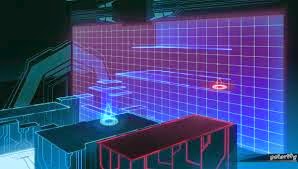
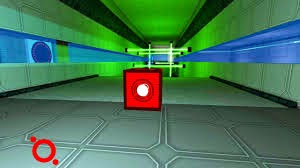
Polarity is a first person platformer puzzle game, very much in the same sub-genre as Portal. In this game, you play as a futuristic hacker, with each level representing a computer system you are hacking. This allows the gameplay to exist for fun rather than realism, and allows for a more Tron-like visual style.
The name Polarity refers to the player's ability to switch back and forth between two different polarities, represented by the colors red and blue. This determines how you interact with several of the color coded game elements that make up many of the puzzles throughout the game. Early on, the chosen polarity is quite important, but towards the middle it is less so, as new puzzle mechanics are introduced that are polarity independent. Towards the end of the game it comes back as a major part as all of the tricks are combined.
As in Portal, each level of Polarity consists of a handful of rooms that you must navigate through to get to the end. The main point though isn't simply to get to the end, but to also collect the three data points in each level. These data points are floating green mists that you must walk (or jump, or fall) to and collect. Sometimes these are right out in the open, sometimes they are tucked off in out of the way corridors you might not think to look down right away, and sometimes they are easy to find, but require a lot of cleverness to get to. Some of the more challenging levels had me stumped bad enough that I had to come back to them later. Prepare to think in this game!
I do have to complain a bit about the controls. For the most part, they worked great, adopting the now standard console FPS gamepad layout. From time to time though, there was bad lag for a minute or so at a time. Not cloud streaming lag, or low on memory lag, but a two second delay between when you touch a control and when the game responds. I don't know if this is a fault of the game itself, or a general issue with my pre-release Ouya console, but I'm hoping it gets cleared up before the official launch, as I imagine I'll probably play through this game again at some point. It's short enough to invite replay. Maybe I'll try a speed run?
Overall, I found the presentation to be top notch, from the music to the UI, to the atmosphere in general. While most of the early Ouya games so far are full tongue-in-cheek self-aware satire or retro nostalgia, Polarity is one of the few that actually takes itself seriously, and one of the few so far to really make the Ouya feel like an actual console. Hopefully, this is a sign of things to come, both for the Ouya, and for BlueButton Games.
I was a backer of the Ouya since the first day of the KickStarter campaign. The idea of a new console for less than $100 that focused mainly on obscure and experimental indie titles just sounded like it would be whole lot of fun. I finally got mine shipped to me last month, and I've been enjoying playing through the game demos. So far, there aren't many games on it, and most of them are Android ports, but there was one Ouya exclusive title that caught my eye almost immediately. A game called Polarity.
The name Polarity refers to the player's ability to switch back and forth between two different polarities, represented by the colors red and blue. This determines how you interact with several of the color coded game elements that make up many of the puzzles throughout the game. Early on, the chosen polarity is quite important, but towards the middle it is less so, as new puzzle mechanics are introduced that are polarity independent. Towards the end of the game it comes back as a major part as all of the tricks are combined.
As in Portal, each level of Polarity consists of a handful of rooms that you must navigate through to get to the end. The main point though isn't simply to get to the end, but to also collect the three data points in each level. These data points are floating green mists that you must walk (or jump, or fall) to and collect. Sometimes these are right out in the open, sometimes they are tucked off in out of the way corridors you might not think to look down right away, and sometimes they are easy to find, but require a lot of cleverness to get to. Some of the more challenging levels had me stumped bad enough that I had to come back to them later. Prepare to think in this game!
I do have to complain a bit about the controls. For the most part, they worked great, adopting the now standard console FPS gamepad layout. From time to time though, there was bad lag for a minute or so at a time. Not cloud streaming lag, or low on memory lag, but a two second delay between when you touch a control and when the game responds. I don't know if this is a fault of the game itself, or a general issue with my pre-release Ouya console, but I'm hoping it gets cleared up before the official launch, as I imagine I'll probably play through this game again at some point. It's short enough to invite replay. Maybe I'll try a speed run?
Overall, I found the presentation to be top notch, from the music to the UI, to the atmosphere in general. While most of the early Ouya games so far are full tongue-in-cheek self-aware satire or retro nostalgia, Polarity is one of the few that actually takes itself seriously, and one of the few so far to really make the Ouya feel like an actual console. Hopefully, this is a sign of things to come, both for the Ouya, and for BlueButton Games.
Monday, June 10, 2013
Heavenly Sword (Ninja Theory, 2007)
Wake and Tiny and Big: Grandpa's Leftovers were both fun indie titles, but after playing through both of them I was in the mood for something a bit grander. I was ready for some epic adventuring AAA style. I started looking through my unplayed games and remembering the various TV ads I'd seen. Until recently I didn't own a Playstation 3, and there are still plenty of PS3 exclusives that I haven't had a chance to play yet. One game that I remember seeing ads for all the time was Heavenly Sword. Oddly enough, I don't remember anybody mentioning it lately. So, I popped it in to see what this game was all about.
Heavenly Sword started off by wowing me with its amazing production value. Once I got past the loading screens (they tend to feel a bit long) I saw the first cutscene. Whoever it was that worked on these cutscenes, they all did an amazing job. It felt like watching a movie.
Then the game started with a tutorial level where I learned the basic controls while fighting off enemies in a contained location. Then, another tutorial level about sniping with a bow and arrow. It was frustrating at first because it had you control the arrows mid flight by tilting the entire controller, trying to compete with the Wii's 2007 popularity. Luckily, you can turn off the motion control and use the left stick instead which is much easier.
Then, it was back to another combat tutorial? And then another? This is when I caught on to Heavenly Sword's dirty little secret. While it tries its best to present itself off as God of War with a chick, Heavenly Sword is actually a series of mini-games, chained together with elaborate cutscenes and disguised as an adventure. Each mission has you in a contained area, sometimes getting from one side of the area to the other, but often just staying in one spot while enemies come at you. After each mission is a cutscene, and then you are in a different area for the next mission. There is no flow, and I never felt as if I was actually exploring this world. I was simply reacting to it.
Let's talk about the combat, because that's something the game did right. The combat in Heavenly Sword had a smooth flowing hack n' slash style that was obviously heavily influenced by God of War. There are three stances to choose between, selectable with the L1 and R1 triggers. The default speed stance has you dual wielding as the sword splits in two and allows you to quickly slice a path through the fodder. The range stance puts these two swords on the ends of chains that can be swung in wide arcs God of War style to pick away at enemies while keeping a safe distance. The power stance combines the weapon back into the large two handed sword seen in the cutscenes.
The stances also effect what incoming attacks you can block. There's no block button, as long as you have the correct stance and you're not in the middle of attacking, you can block. Pressing the triangle button at exactly the right time can result in a counter attack, but it's difficult to do and not much better than just hacking away. It also sometimes leads to another of the game's annoyances, Quick Time Events.
If you're not a QTE fan, you should probably stay away from this game. They aren't optional. When they happen, you get them right, or you fail. Often some of the most exciting action in the game happens over quick time events, which means that instead of watching this exciting action, your eyes are glued to the bottom of the screen waiting for the next unforgiving button prompt to appear. If anybody else is in the room watching you, they can tell you how cool what you just missed was. But the worst QTEs are at the end of each boss battle. After slowly hacking away at the boss's health bars while listening to the same canned voice over repeat itself (and sometimes having to hack through hordes of weaker enemies too), you finally get them down to near defeat. Then, the QTE prompts. They are long and intricate and must be done immediately and perfectly or else not only is the boss not defeated, half of the boss's health is returned. That's usually a good time to let yourself die and start over.
All of that was when using Nariko, the redhead from the cover art. About a third of the time you are playing as her friend Kai, a sprightly young girl with a crossbow that for our purposes functions as a sniper rifle. In the actual sniper missions, this works great as you pick off enemies from a distance while protecting your friends. When it doesn't work so great is when they put you in a room full of enemies that must be shot in the head to be taken down. Kai has no melee attacks at all, and no auto lock, not even a way to shoot while running, only zoom in sniper mode. Meanwhile the guy you're trying to aim at is 3 steps away and has a giant war hammer speeding towards you. Not the best time.
The cutscenes, as I mentioned, look amazing, and are expertly acted and shot. What's so odd about them is that while the faces are some of the most expressive seen in gaming, with every pore and whisker realistically rendered, everybody's hair looks like the sort of low-poly mesh you'd see rendered in real time on a PS2. The cutscenes also tend to be on the long side, and sometimes stray from the needed storytelling. Every character's back story is expanded upon, but often it just feels like a candy coating to distract you from the rigidness of the gameplay.
There's something else odd about Heavenly Sword. There was obviously a lot of thought and effort put into making the main characters that you play very attractive. The box art, the TV commercials, even the loading screens imply that this is meant to be one of the big draws of the game. The cutscenes are often viewed from provocative angles. But when it comes to actually playing the game, the camera is always so far away that you can barely even tell that it's not a dude running around the screen. This doesn't affect gameplay at all, but it just seems odd.
The world of Heavenly Sword mostly consists of one large elaborate palace, much like in Ico. You never get to actually pick which room you're going to be in, so there's no fear of getting lost. The puzzles that pop up from time to time feel as if they were an afterthought. They range from simple tasks such as picking up a shield and throwing it at a switch to more elaborate tasks such as turning a crank to expose a switch and then throwing a shield at it before it goes away. That's about it for puzzles.
All in all, the best way for me to describe my experience with Heavenly Sword is to say it's a game in which everything about it is almost great. If not for writing these reviews, I probably would have set it aside unfinished and added it to the list of games I mean to complete one day but never do. It's still a sight worth seeing, but you might want to save yourself some time and frustration and just watch somebody else play through it on youtube instead.
Heavenly Sword started off by wowing me with its amazing production value. Once I got past the loading screens (they tend to feel a bit long) I saw the first cutscene. Whoever it was that worked on these cutscenes, they all did an amazing job. It felt like watching a movie.
Then the game started with a tutorial level where I learned the basic controls while fighting off enemies in a contained location. Then, another tutorial level about sniping with a bow and arrow. It was frustrating at first because it had you control the arrows mid flight by tilting the entire controller, trying to compete with the Wii's 2007 popularity. Luckily, you can turn off the motion control and use the left stick instead which is much easier.
Then, it was back to another combat tutorial? And then another? This is when I caught on to Heavenly Sword's dirty little secret. While it tries its best to present itself off as God of War with a chick, Heavenly Sword is actually a series of mini-games, chained together with elaborate cutscenes and disguised as an adventure. Each mission has you in a contained area, sometimes getting from one side of the area to the other, but often just staying in one spot while enemies come at you. After each mission is a cutscene, and then you are in a different area for the next mission. There is no flow, and I never felt as if I was actually exploring this world. I was simply reacting to it.
Let's talk about the combat, because that's something the game did right. The combat in Heavenly Sword had a smooth flowing hack n' slash style that was obviously heavily influenced by God of War. There are three stances to choose between, selectable with the L1 and R1 triggers. The default speed stance has you dual wielding as the sword splits in two and allows you to quickly slice a path through the fodder. The range stance puts these two swords on the ends of chains that can be swung in wide arcs God of War style to pick away at enemies while keeping a safe distance. The power stance combines the weapon back into the large two handed sword seen in the cutscenes.
The stances also effect what incoming attacks you can block. There's no block button, as long as you have the correct stance and you're not in the middle of attacking, you can block. Pressing the triangle button at exactly the right time can result in a counter attack, but it's difficult to do and not much better than just hacking away. It also sometimes leads to another of the game's annoyances, Quick Time Events.
If you're not a QTE fan, you should probably stay away from this game. They aren't optional. When they happen, you get them right, or you fail. Often some of the most exciting action in the game happens over quick time events, which means that instead of watching this exciting action, your eyes are glued to the bottom of the screen waiting for the next unforgiving button prompt to appear. If anybody else is in the room watching you, they can tell you how cool what you just missed was. But the worst QTEs are at the end of each boss battle. After slowly hacking away at the boss's health bars while listening to the same canned voice over repeat itself (and sometimes having to hack through hordes of weaker enemies too), you finally get them down to near defeat. Then, the QTE prompts. They are long and intricate and must be done immediately and perfectly or else not only is the boss not defeated, half of the boss's health is returned. That's usually a good time to let yourself die and start over.
The cutscenes, as I mentioned, look amazing, and are expertly acted and shot. What's so odd about them is that while the faces are some of the most expressive seen in gaming, with every pore and whisker realistically rendered, everybody's hair looks like the sort of low-poly mesh you'd see rendered in real time on a PS2. The cutscenes also tend to be on the long side, and sometimes stray from the needed storytelling. Every character's back story is expanded upon, but often it just feels like a candy coating to distract you from the rigidness of the gameplay.
There's something else odd about Heavenly Sword. There was obviously a lot of thought and effort put into making the main characters that you play very attractive. The box art, the TV commercials, even the loading screens imply that this is meant to be one of the big draws of the game. The cutscenes are often viewed from provocative angles. But when it comes to actually playing the game, the camera is always so far away that you can barely even tell that it's not a dude running around the screen. This doesn't affect gameplay at all, but it just seems odd.
The world of Heavenly Sword mostly consists of one large elaborate palace, much like in Ico. You never get to actually pick which room you're going to be in, so there's no fear of getting lost. The puzzles that pop up from time to time feel as if they were an afterthought. They range from simple tasks such as picking up a shield and throwing it at a switch to more elaborate tasks such as turning a crank to expose a switch and then throwing a shield at it before it goes away. That's about it for puzzles.
All in all, the best way for me to describe my experience with Heavenly Sword is to say it's a game in which everything about it is almost great. If not for writing these reviews, I probably would have set it aside unfinished and added it to the list of games I mean to complete one day but never do. It's still a sight worth seeing, but you might want to save yourself some time and frustration and just watch somebody else play through it on youtube instead.
Subscribe to:
Posts (Atom)


.jpeg)


.jpeg)


.jpeg)


.jpeg)


.jpeg)


.jpeg)


.jpeg)


.jpeg)